Performance Marketing Guide 2026: How to Scale Revenue with Data-Driven Campaigns
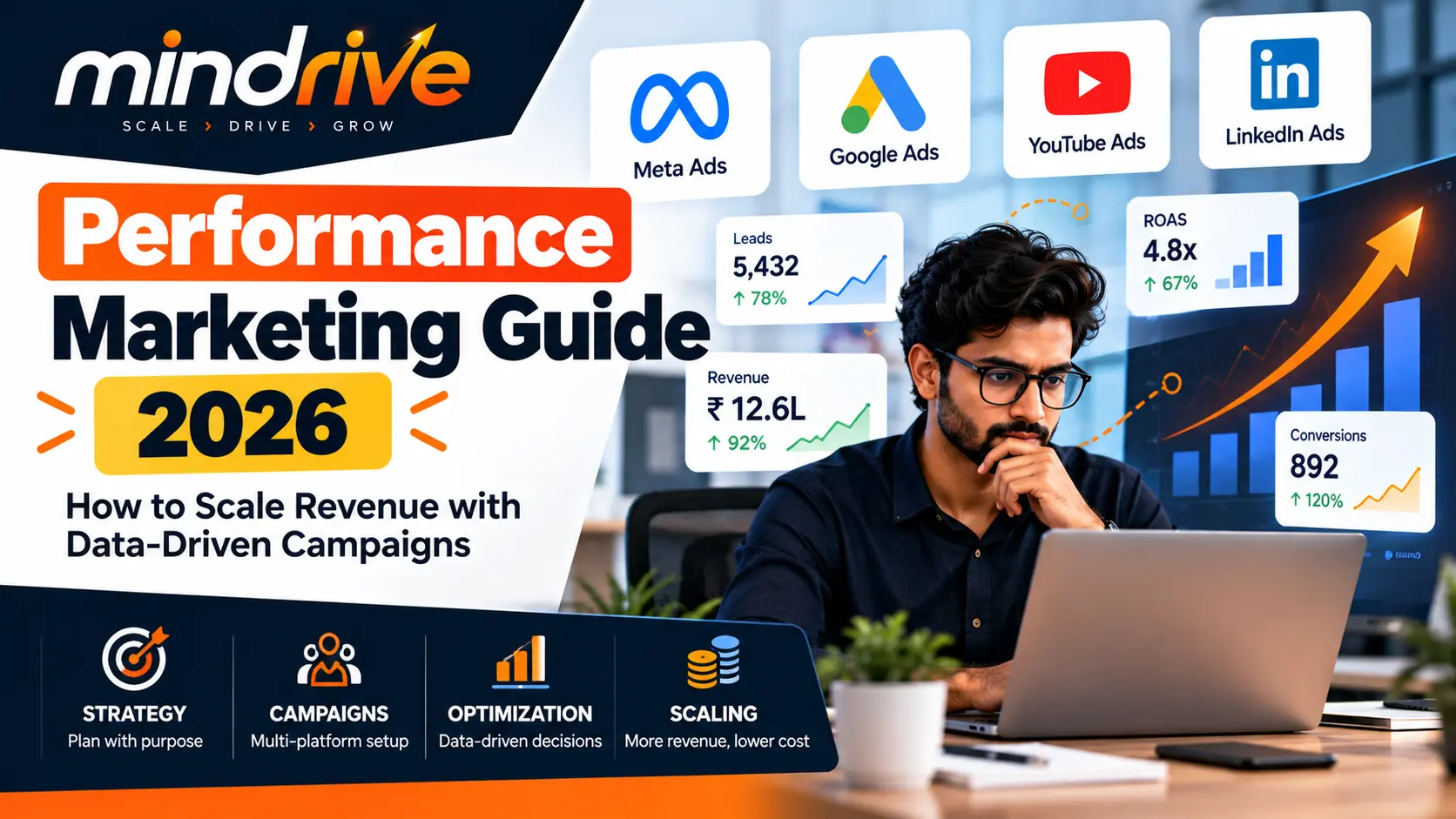
Table of Contents
- What Is Performance Marketing?
- Core Channels in 2026
- 1. Google Ads (High-Intent Acquisition)
- 2. Meta Ads (Demand Generation)
- 3. PPC Integration Strategy
- 4. SEO for Long-Term Stability
- The 4-Step Performance Marketing Framework
- 1. Audit & Funnel Analysis
- 2. Structured Campaign Architecture
- 3. Continuous Optimization
- 4. Scaling Based on Profitability
- Performance Marketing for High-Consideration Industries
- Managing Performance Marketing Internationally
- Common Performance Marketing Mistakes
- Frequently Asked Questions
- How long does performance marketing take to show results?
- Is performance marketing better than traditional marketing?
- What budget is required to start?
- Want an Honest Read on Your Current Campaigns?
The difference between performance marketing and just "running ads" isn't the platforms used — it's whether every campaign is judged against a real business outcome (a booked consultation, a qualified lead, a sale) instead of clicks or impressions. Most accounts we take over are technically running fine; what's usually missing is that connection between ad spend and what actually happened afterward.
What Is Performance Marketing?
Performance marketing is a results-driven approach where every campaign is optimized around measurable KPIs such as:
- Cost Per Lead (CPL)
- Return on Ad Spend (ROAS)
- Customer Acquisition Cost (CAC)
- Revenue Attribution
Unlike traditional branding campaigns, performance marketing focuses on predictable growth.
Core Channels in 2026
1. Google Ads (High-Intent Acquisition)
Search campaigns capture users actively looking for your services. Structured Google Ads management ensures better targeting and scalable ROI.
2. Meta Ads (Demand Generation)
Facebook & Instagram campaigns create demand and nurture prospects. A structured Meta Ads strategy builds consistent lead flow.
3. PPC Integration Strategy
Integrated PPC campaigns combine search, display and retargeting into one system.
4. SEO for Long-Term Stability
While paid ads generate instant traffic, SEO services build long-term authority and organic lead flow.
The 4-Step Performance Marketing Framework
1. Audit & Funnel Analysis
Identify gaps in landing pages, tracking setup and audience segmentation.
2. Structured Campaign Architecture
Build segmented campaigns by intent level and funnel stage.
3. Continuous Optimization
Reviewing performance daily and changing something daily are different things — daily monitoring catches problems early, but campaigns generally need enough data to exit their learning phase before a change is actually meaningful rather than noise. Weekly is a more realistic cadence for real creative, audience or landing page changes.
4. Scaling Based on Profitability
Increase budget once a campaign has proven profitable at its current spend level, not before — the most common way we see performance collapse is budget doubling on a campaign that was only just starting to stabilize.
Performance Marketing for High-Consideration Industries
Real estate and immigration specifically don't convert on the first interaction — the decision cycle runs weeks, not minutes. Structured retargeting and multi-touch follow-up matter more here than in faster-cycle categories, since the campaign that gets credit for the eventual conversion is rarely the one that produced the first click.
Managing Performance Marketing Internationally
Brands advertising into the UAE, USA, UK and Canada need to account for region-specific ad policy, currency and tracking differences — a campaign structure that works in one market doesn't automatically transfer to another without adjustment.
Common Performance Marketing Mistakes
- Scaling budget before a campaign has proven stable, not after
- Treating tracking (GA4, CAPI, Pixel) as a one-time setup instead of something that needs periodic auditing
- Making creative or targeting changes too frequently to ever see a clean read on what worked
- Optimizing toward clicks or leads instead of the revenue or bookings those leads actually produce
Frequently Asked Questions
How long does performance marketing take to show results?
Paid campaigns can generate data within 7–14 days. Stable optimization results typically appear within 30–60 days.
Is performance marketing better than traditional marketing?
Performance marketing is measurable and scalable. Traditional marketing focuses more on brand awareness.
What budget is required to start?
Budget depends on industry competition. Most growth-focused businesses start testing with structured monthly budgets and scale from there.