
Clinic Marketing Compliance: What Google & Meta Actually Restrict
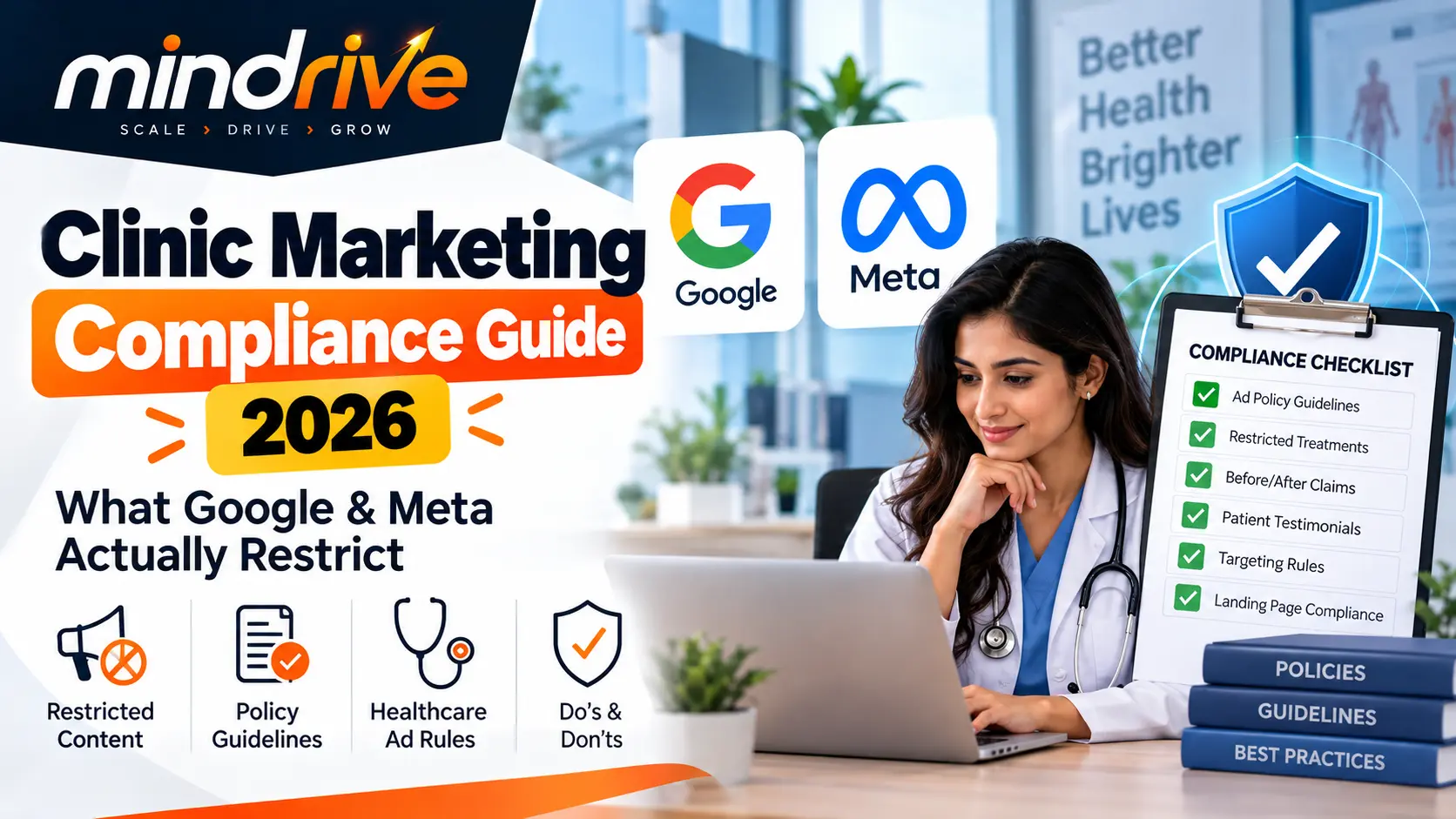
Table of Contents
Dental, cosmetic and fertility clinics face advertising rules that most other high-ticket service businesses simply don't. Understanding what's actually restricted — versus what's just commonly misunderstood — is the difference between a campaign that runs smoothly and one that gets disapproved or suspended mid-flight.
Personalized Health Claims: The Core Restriction
Both Google and Meta restrict ads from implying they know something personal about the viewer's health condition. Practically, this means ad copy shouldn't address the viewer as if they already have a specific condition ("Struggling with infertility?") — even when the intent is empathetic rather than manipulative. Framing the same message around the service or outcome category, rather than the viewer's presumed personal situation, generally stays within policy.
Certification Requirements by Category
Some clinic categories require the advertiser to complete a platform certification process before ads are eligible to run at all. This varies by category and by platform, and changes over time — the practical takeaway is to check current requirements for your specific specialty before building a campaign around it, rather than assuming a previous approval still applies.
No Guaranteed-Outcome Claims
Beyond platform policy, promising specific treatment outcomes or success rates in advertising is both a policy risk and, more importantly, not something any clinic can honestly guarantee in an ad. Messaging built around your process, experience and approach tends to perform better than outcome guarantees anyway, since prospective patients are generally skeptical of guarantees in a medical context.
What This Means for Targeting
Because personalized health-condition targeting is restricted, campaigns for clinics typically rely more on geographic and demographic targeting, and on the ad creative itself to reach the right audience — rather than on inferred health-interest signals the platforms increasingly restrict or don't support for this category.
Building the Appointment Funnel
Once the compliance layer is handled, the actual conversion goal for most clinics is a booked consultation, not a form submission. Qualification questions appropriate to the specialty — general timeline, procedure category of interest — help route inquiries to the right staff member faster, without asking for sensitive personal health information upfront.